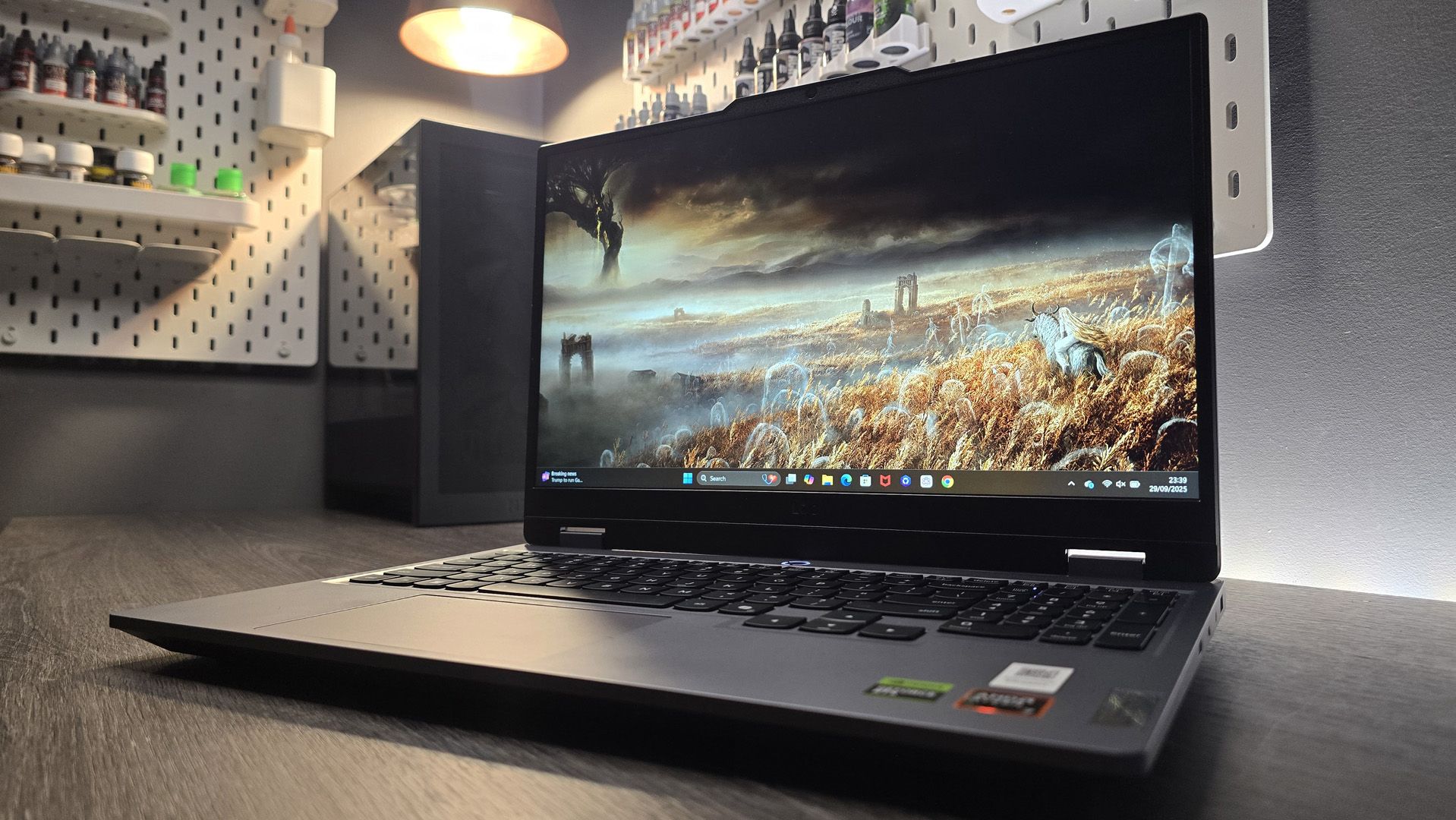
As is my wont, I’ve spent the morning checking through the best deals on gaming laptops, which is about as tough going as you might expect in these, the days of the RAMpocalypse. But though prices have absolutely gone up, and you’ll be lucky to find a worthy RTX 5060 gaming laptop for under $1,000, there are some good machines out there for prices that don’t immediately make me sick up a little in my mouth.
Where the acid tang of bile does dance across the tongue, however, is when it comes to trying to pin down exactly what level of performance I might be given to expect from a certain model of gaming laptop and its graphics chip. And I am beyond infuriated at laptop manufacturers arbitrarily hiding the absolutely vital information.
|
GPU |
TGP |
|---|---|
|
RTX 5050 |
50-100 W |
|
RTX 5060 |
45-100 W |
|
RTX 5070 |
50-100 W |
|
RTX 5070 Ti |
60-115 W |
|
RTX 5080 |
80-150 W |
|
RX 5090 |
95-150 W |
It’s something we always note in our gaming laptop reviews and in the end it often comes to reviews being the only way to reliably find what TGP you might expect to find in a machine. But then you have to rely on the fact that someone, somewhere has had a chance to take a look at the very SKU you’re eyeballing in retail.
Which is absolutely maddening, especially as it’s the most vital specification when it comes to choosing between otherwise similarly specced machines. And there’s only one reason why they would hide the data, and it’s not a good one.
If you’re looking for the most affordable RTX 5060-powered gaming laptop, it’s not unreasonable that you would land upon either of these MSI Cyborg SKUs. One has an Intel Core 7 240H and the other has an Intel Core 5 210H, but both have an RTX 5060 GPU. And I defy you to look at either of those listing pages and be able to tell me what the TGP ratings are. Thankfully, MSI is one of the few manufacturers that does tell you in its product pages what the peak power limits are—in this case 55 W.
But this Asus V16 with another RTX 5060? Nowhere, either in the product listing or the retailer listing does it tell you that it’s running a 65 W power limit. How would I know that, rather than pick the Asus machine, I should actually go for either the cheaper HP Victus or preferably the Lenovo LOQ system?
Lenovo at least does give out the info, though you have to go through an opaque Lenovo parts site to get there, and with HP I had to talk to customer services, and I’m still not entirely sure they weren’t grifting me. I did complain to the customer services technician that it was joke that manufacturers didn’t make the information clear and they tried to blame Nvidia for witholding the information from public consumption, before sending me a link to the ratings for RTX 30- and 40-series HP laptops, waving the RTX 50-series TGPs aside as the same.
Still, both of these machines have higher TGP ratings for what is effectively the exact same graphics silicon as the MSI Cyborg and Asus V16 gaming laptops, and will deliver higher, smoother, more reliable gaming performance for around the same sort of cash.
But, damn it, it should be easy to find that vital info and I’m just mad as hell that it’s not [rant over].
Best gaming laptop 2026
Gaming Laptops,Hardware,Gaming PCs#Gaming #laptop #makers #forced #disclose #graphics #card #TGPs #that039s #hill #happily #die1778080990
