Weird Weekend
Weird Weekend is our regular Saturday feature where we celebrate PC gaming oddities: peculiar games, strange bits of trivia, forgotten history. Pop back every weekend to find out what Jeremy, Josh and Rick have become obsessed with this time, whether it’s the canon height of Thief’s Garrett or that time someone in the Vatican pirated Football Manager.
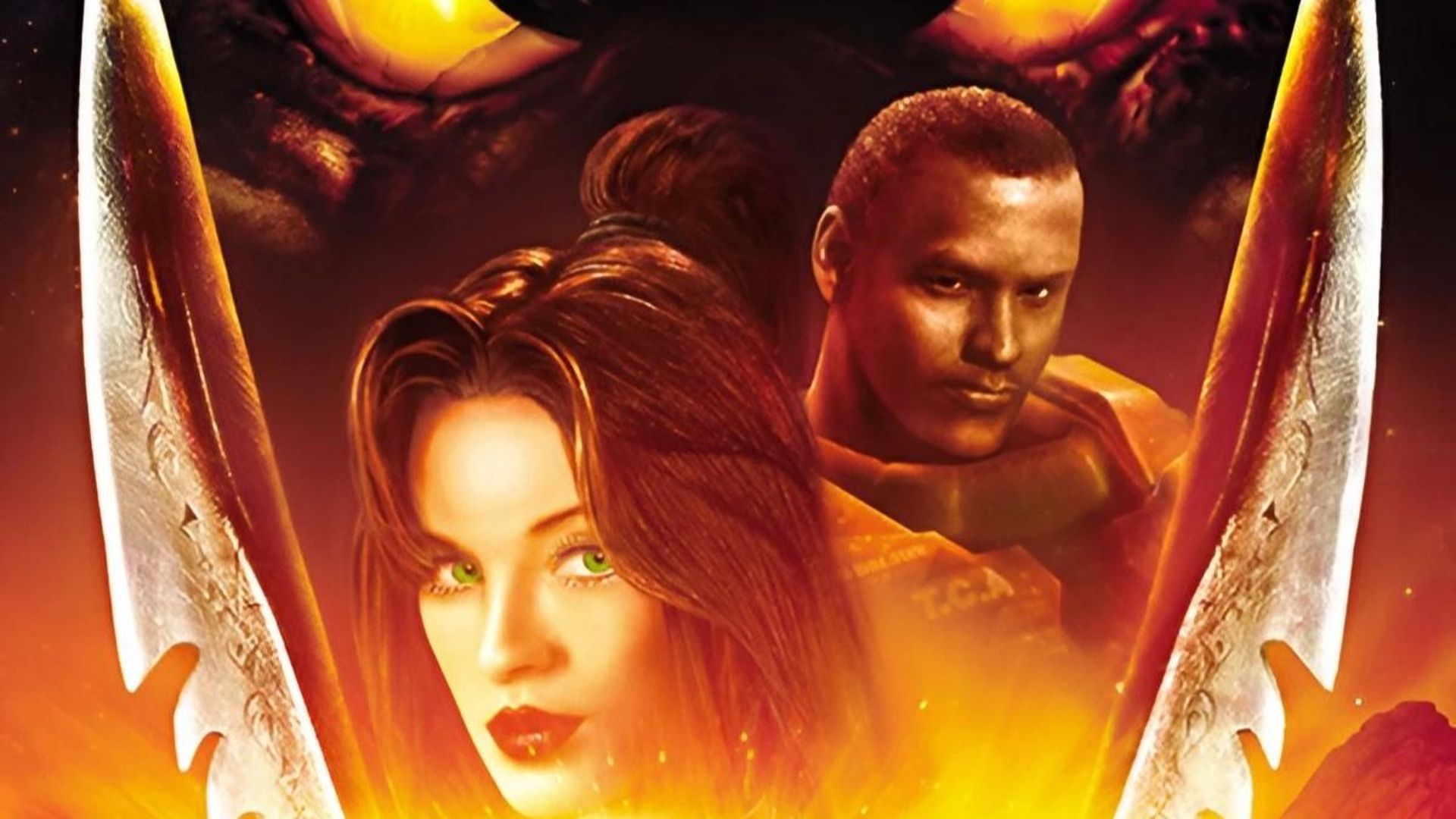
It may be difficult to imagine in 2026, but there was a time when Unreal 2 was the most exciting game on the release calendar. The original Unreal set a new standard for FPS design when it launched in 1998, thanks to its cutting-edge visual tech, breezy outdoor levels and bot-supported multiplayer mode.
The sequel, developed by Legend Entertainment, was set to be every bit as revolutionary. It would feature a cinematic campaign, dynamic factions, driveable vehicles, and an elaborate, team-based multiplayer, all rendered in the deliriously advanced Unreal Engine 2.
Yet the Unreal 2 that launched in February 2003 was markedly different from what had been promised. It had no multiplayer, only a short singleplayer campaign. It had no vehicles or dynamic factions. It also cost $10 more than any other game on the shelves, a price that would have been difficult to justify even if it had delivered on all its promises.


In the rapidly moving FPS scene of the early 2000s, Unreal 2 was swiftly forgotten. Yet the story of its development is anything but forgettable. Legend’s last and most ambitious project, Unreal 2’s development was marred by leadership crises, bitter creative differences, and one of the most preposterous business deals in video game history. Ultimately, rescuing the project from development hell meant sacrificing everything that would have made it successful.
Knock-on effect

Unreal 2 was the final game developed by Legend Entertainment, led by Glen Dahlgren, the game designer and novelist who had previously directed Legend’s 1999 FPS The Wheel of Time. Like Unreal 2, The Wheel of Time endured a turbulent development and released with a mere fraction of its ideas realised. Yet where The Wheel of Time was Dahlgren’s baby from start to finish, Unreal 2 wasn’t his idea or his vision; it was a project he ultimately became involved in with reluctance.
“I would have loved to have worked on Unreal 2 from the beginning, because it represented an opportunity to make it big,” he says. “None of my games have really hit the charts and been so overwhelmingly popular [to] cement my place in game design history. And I wanted it, especially early on in my career.”
But as Dahlgren points out in his own account of Unreal 2’s development, he was not the logical choice to lead Unreal 2. The logical choice was Mike Verdu, Legend’s co-founder and, until recently, the Vice President for Games at Netflix.
Verdu had previously overseen development of Unreal’s expansion, the well-received Return to Na Pali, at the behest of Epic and its publisher and parent company Infogrames (now Atari). Between Return to Na Pali and Dahlgren’s The Wheel of Time, Legend was rapidly establishing itself as the Raven Software to Epic’s id, and Verdu saw an opportunity to take things to the next level:

“With Glen working on The Wheel of Time and the initial indications pointing the way towards that being an amazing game, we started a conversation about doing the sequel for Unreal and having it a lot more grounded in story than the first game,” Verdu explains. “And I thought ‘Oh boy, if we could combine shooter gameplay with exploration of new worlds and a story where you could actually develop relationships with characters, we could have something that nobody’s ever seen before.'”
We could have something that nobody’s ever seen before.
Mike Verdu
Verdu wanted to create an all-new Unreal experience, one that leant harder into the cinematic sci-fi of the original. “I hatched a vision for a game that, rather than you just being constrained to one world, it would have this story device that allowed you to move between worlds, and that became a spaceship,” he explains. “We were going to create a little simulation of a world on a ship, and it would have these characters that move around, that you have these interesting conversations with, and those characters were going to develop along with the story, and your relationship with them was going to develop.”
This would be combined with planetary exploration levels set on “very unique environments, like navigating inside the bowels of an organism,” with FPS mechanics that Verdu describes as “some very fresh, but some very familiar as well”. Unreal’s primary enemies, the Skaarj, would form the initial adversaries for Unreal 2. “Then, you would fight these new enemies that manifested as the ultimate threat.”
If this sounds an awful lot like Mass Effect, that’s because that is essentially the experience Verdu was shooting for, years earlier than BioWare’s world-changing RPG. “Mass Effect [was a] beautiful expression of the thing we were taking the initial arrows [for],” he says.
Running into trouble

Inspired and energised, Verdu took the team Dahlgren had assembled for The Wheel of Time, expanded it to meet the greater demands of Unreal 2, and commenced work on the sequel. Dahlgren, meanwhile, began developing his own project, a third-person shooter named Endgame. “It was a riff on The Running Man, a game show where you would actually be a contestant inside of an old, rebuilt amusement park [with] all sorts of automatons in it that would be coming after you.”
I couldn’t get the upper brass to buy into my concept.
Glen Dahlgren
The key hook of Endgame was that you didn’t just have to survive, you had to survive with style. “Multiplayer facetime was a huge thing,” Dahlgren says. “If you could be interesting enough to be on screen, you would get points for that. So you would have to figure out ways to attract the attention of the crowd. And then if you died, something would pop out of your back and say ‘This death sponsored by X.'”
Dahlgren was excited by the idea, but he struggled to sell it to his superiors, such as Legend co-founder and studio head Bob Bates. “I couldn’t get the upper brass to buy into my concept,” he says. “I think it had to do with what they saw for our studio. We’re not as interested in jumping onto an original IP; [we’re] much more interested in us working on something like Unreal 2.”
Nonetheless, Dahlgren persisted with the concept. Meanwhile, Verdu’s grand ambition for Unreal 2 ran into problems almost immediately. “The price tied to this crazy ambition manifested very quickly. It was just enormously complex to try with my tiny team,” he explains. “I look back on my design and I think I bit off way more than we could chew. Bringing that to life was taking far longer than was reasonable.”

On top of this, something happened in Verdu’s personal life that would ultimately change the course of everything. “I became a caregiver for more than a year to someone who basically needed almost full-time care,” he explains. “I was juggling doctor visits, hospital visits and a lot of in-person time with trying to run this impossible project that wasn’t cohering like it needed to.”
Verdu summarises the experience as “one of the more difficult years of my life.” Despite his best efforts to keep everything going, Verdu’s circumstances inevitably began distracting him from his role as Unreal 2 lead. “That hurt the project a lot. And that’s where I started to draw on Bob and Glen to help cover the gap that was created by my absence.
Verdu asked Dahlgren if he would join Unreal 2 as a producer to help manage things. Dahlgren accepted, but he strictly limited his input to that role: “I don’t think he would have minded if I had been more than that, but I specifically said no,” Dahlgren explains. “As soon as I started involving myself in those decisions, I would want to make [Unreal 2] my own. I would become very invested in doing so and it was not appropriate for me to be in that position.”
Team deathmatch

Sadly, Dahlgren assuming the role of producer quickly proved untenable. “It was weird for the team to have me come on and have me looking at art and looking at the development and looking at the design and not weighing in on it, because that’s what I did,” he says. “On The Wheel of Time, I was the ‘buck stops here’ guy. But that was not the case on Unreal 2. Theoretically, Mike was that guy. But it wasn’t happening as it should, so people felt a little lost.”
What didn’t help was that, during the period in which Verdu had battled to manage his personal and professional life, factions had developed between the various disciplines within the team, with everyone having their own beliefs about what was best for the project and how it should move forward. This created tension, particularly between the artists and level designers.
“The people making levels in The Wheel of Time had a lot of autonomy over the environment,” Dahlgren says. “And I think they were used to having that authority when we brought in more artists, people who were really talented like Dawid Michalczyk and Anthony Pereira. When they produced these incredible pieces of concept art and then delivered them to the level designers, the level designers were excited to have stuff to work from, but they were used to being able to have the last say.”
To bridge the gap, Dahlgren would organise level reviews that involved both the designers and the artists. Yet rather than bringing both sides to an accord, these reviews often led to bitter arguments. “Everybody was representing their personal position. ‘I am the concept artist here. I know what I’m talking about. I’m classically trained in all this. Who are you? You are a level designer who was born on the internet. What kind of art background do you have?’ And I was stuck, because I don’t think I’d taken over by that point.”

With divisions growing worse, something had to change. And eventually, it did, as Verdu’s personal circumstances took another turn that pushed him into a decision. “Fortunately, the person involved got better, but the relationship that turned me into a caregiver ended after that person got better,” he says.
I did feel like I’d let them down.
Mike Verdu
Verdu had already been thinking about moving from Legend’s base in Virginia out to California, and the traumatic experiences he had been through over that year, combined with an unexpected opportunity, helped him make his choice. “EA came and recruited me to work on the Command & Conquer team, just as I’m coming out of all this personal drama,” he says. “To add insult to injury for Bob and Glen, they had to deal with the idea that I might leave them with the project unfinished.”
After what Verdu describes as “a long series of conversations”, Dahlgren ultimately decided to step up and take control of Unreal 2 entirely. Verdu departed Legend shortly after. “I did feel like I’d let them down and let Epic down by first getting tangled up in all this drama as a caregiver and then moving,” Verdu says. “I certainly didn’t think it was my finest hour.”
Unreal deal

When Dahlgren took the helm of Unreal 2, the project seemed destined to hit the rocks. Alongside being rife with internal division, the game Dahlgren inherited was massively behind schedule because working with Unreal Engine 2 proved a significant technical challenge. While UE2 formed the basis of Unreal 2, it was not the all-purpose game engine that it is today. As such, Legend had to create a lot of bespoke tech to realise its vision, such as a custom AI system and a particle engine adopted from The Wheel of Time.
“I remember there being huge advances in the static meshes they were producing, which enabled us to do higher poly but non interactable objects,” Dahlgren says. “Those made them look great, but we couldn’t do anything.” This caused problems when designing worlds such as Acheron, a “living world” riddled with organic spikes. “What I wanted to do was, if something was coming toward you, I wanted the spikes to move. And there [was] just no chance of that ever happening.”
We would get builds that just didn’t work with our content, so we would have to redo everything.
Glen Dahlgren
Moreover, Epic was focussed on its own work developing Unreal Tournament 2003, so offering technical support to Legend was not a priority. “Unreal was evolving as it should, but it wasn’t being backwards compatible,” he says. “We would get builds that just didn’t work with our content, so we would have to redo everything.”
On top of this, Legend was under intense pressure from Infogrames to finish the game as quickly as possible. This was due to a ludicrous deal that Infogrames had signed with Epic. According to this deal, Epic had final approval over the entire project and could dictate the length of development, while Infogrames was wholly responsible for funding the project, however long it took.

Dahlgren doesn’t know why Infogrames signed this deal. But he chalks it up to Infogrames’ desperation to publish Unreal 2. “I think they just wanted the contract,” he says. He also puts it down to the negotiation skills of Mark Rein, Epic’s Vice President. “He was the dealmaker. He would get anything he possibly could,” Dalhgren recalls. “I remember when we were shopping Wheel of Time on the road, he was asking for $5 million, which was an outrageous amount of money to ask [from] any publisher at the time. But he did it with a straight face.”
Even the music proved unusually challenging. Initially, the music was contracted out to Jeremy Soule—who composed the music for The Elder Scrolls 3: Morrowind around this time, and would go on to write scores for Oblivion and Skyrim. Hiring Soule should have been a slam dunk for Legend. Yet Dahlgren began getting feedback from his team that the music was “not what we signed up for”.
Dahlgren looked into it: “I saw that he was subcontracting to other people, and the stuff that was being produced by those other people was not the standard that I was holding the game to.” In the end, the bulk of the musical score was done by Tommy Tallarico’s production company. “Tommy came in and created some outstanding pieces.” Dahlgren says.
Monster kill

The result of all this chaos was a game that wasn’t really a game. Unreal 2 was a disconnected set of levels and assets with no sense of narrative or mechanical progression. With this being the case, Dahlgrens’ priority became to stitch everything together, to take what all the artists, programmers and designers had built within their various factions and make it into a coherent experience.
“I wrote the moment-to-moment experience for most of those levels,” Dahlgren says. “When we had the finale, the conclusion … the fact that the gravity engine is going crazy and you get the singularity weapon, and then everything starts turning and shifting, none of that existed before I got onto the project.”
But with the project behind schedule and Infogrames breathing down Legend’s neck, the studio didn’t have the bandwidth to incorporate all the existing ideas. So Dahlgren began the grim process of cutting features from Unreal 2. Some of these were unfinished, like levels. “I remember James Parkman had this huge underwater set of levels that didn’t really work in the story,” he says. “I think there were [NPCs] in there that spoke like medieval knights. I asked him ‘Why did they speak like that’ and he said ‘I thought it would be cool.'”

Enemies and weapons were also cut from the project. “I remember I killed a weapon because it didn’t work with the progression that I had produced. And then the concept artist—I think it was Anthony—came up to me and said: “I don’t know if you know this, but that was my favourite weapon,” Dahlgren recalls. “He wanted to let me know that he was gonna remember that.”
It made it possible for us to ship something, but what we shipped was not what people wanted.
Glen Dahlgren
In events like this, Dahlgren would try to assuage designers by reassuring them their babies could return in an expansion or mission pack. But it didn’t always work. “I only have so many of those cards I can play before people went crazy on me.”
But cutting levels and assets wasn’t enough. Legend also had to cut many of the innovative features that it had promised would be in Unreal 2 right at the outset of development. Most devastatingly of all, though, Legend had to cut multiplayer. “I think [that] was a really, really hard blow,” Dahlgren says. “It made it possible for us to ship something, but what we shipped was not what people wanted.”
Duel

Even with Dahlgren cutting down most of what would have made Unreal 2 stand out, Infogrames was still not satisfied with the timeline. In the end, a meeting was scheduled between Infogrames, Legend, and Epic to hash out a plan for Unreal 2’s remaining development.
But Infogrames went into this meeting with a specific agenda, one that it forced upon Legend. “They told us that our position would be [that] we needed to ship in two months, and we were capable of doing that,” Dahlgren says. “We told them ‘No, that’s impossible. There’s no way we can finish this game in two months.’ And they said. ‘Well, that’s what you’re gonna say.'”
Dahlgren knew this was an absurd position to take, not only because it was wholly unfeasible, but also because he knew that Epic knew it was unfeasible. Due to their working relationship, Epic received regular updates on the progress of Unreal 2, meaning they knew exactly what work remained to be done. As negotiation tactics went, Infogrames was playing poker with its cards facing outward.

Nonetheless, Infogrames doubled down, forcing Legend to say to Epic directly that they could finish the game in two months. “Epic’s jaws dropped because they didn’t believe it,” Dahlgren says. “And here’s the moment that got to me. That’s when [Infogrames] turned to Epic and said ‘How dare you? How dare you question the integrity of these people that it can be done in two months?'”
It was so underhanded and so wrong to put us in this position of lying for them.
Glen Dahlgren
Dahlgren was astonished.
“I couldn’t believe this tactic they were taking. It was so underhanded and so wrong to put us in this position of lying for them.” In the end, Epic agreed to a compromise. It wasn’t two months, but according to Dahlgren it was only “a few months more”, which he believes was Infogrames’ goal in the first place. “They leveraged that to try to get some measure of Epic saying ‘It is OK to have a deadline.'”
Unreal 2: The Awakening released in the US on February 4, 2003, and three days later in the EU. It landed to a mixed reception, with reviews criticising the lack of multiplayer and other features Legend had promised, as well as the campaign’s relative brevity. This, combined with the fact that Infogrames priced Unreal 2 at $10 higher than any other game on the market at the time, meant it also underperformed commercially.
Skaarj tissue

Unreal 2: The Awakening released in the US on February 4, 2003, and three days later in the EU. It landed to a mixed reception, with reviews criticising the lack of multiplayer and other features Legend had promised, as well as the campaign’s relative brevity. This, combined with the fact that Infogrames priced Unreal 2 at $10 higher than any other game on the market at the time, meant it also underperformed commercially.
I think there was just no way we could succeed.
Glen Dahlgren
Legend did what it could to support the game post-launch, ultimately releasing a multiplayer mode named Unreal 2: XMP, which was extremely well received by the people who played it. But XMP proved too little, too late. On January 16, 2004, Infogrames shut down Legend Entertainment.
Dahlgren is acutely aware that Unreal 2 was a compromised project. “I think there was just no way we could succeed, but we did the best we would with what we had to work with.” While there were many challenges to Unreal 2’s success, he believes it was launching without multiplayer that spelled doom for the sequel. “If we had released the one with XMP [first], I think it would have gone much, much better,” he says. Verdu agrees. “We should have trimmed the vision down and paid attention to the multiplayer, because the multiplayer that shipped afterward, the XMP pack, was really freaking great.”

Dahlgren now splits his time between game development consultancy and writing novels. The latest of these, The Wrath of Order, was about to release while we spoke, with Dahlgren surrounded by boxes of promo copies. “I finished my series with The Realm of Gods and people loved it,” he says. “Every single review of that book said, ‘It’s great, it’s a wonderful conclusion to the series, and we want more.’ And I realised I did too, [so] I decided to write a sequel series taking place four years after the events in the last book.”
Verdu meanwhile, currently works at Playful.AI, a company he formed with Zynga founder Marc Pincus to explore AI powered game development. He still finds Unreal 2 a difficult project to think about, but he did come away from the experience with a valuable lesson. “Don’t overreach. The minute your reach exceeds your grasp, you’re going to get into a world of hurt.” He took this lesson into the games he worked on at EA, like Battle for Middle-earth 2 and Command & Conquer 3. “We had a vision for those games that was achievable,” he says. “We had to kill ourselves to deliver the games, but we were able to.”
As for Unreal 2, without the weight of expectation lingering over it, critical opinion has warmed in the decades since the game’s release. “If you play it without all that stuff, you discover it’s a pretty good game,” Dalhgren says. “The music is good. The art is fantastic. The story was pretty good.” And while the game may not have matched up with Verdu’s vision for it, the vision itself was entirely on point. “I felt we were at this liminal moment when shooters were about to become storytelling engines as well as combat simulation,” he concludes. “We had a chance to define a new thing.”
FPS,Games#remarkable #story #Unreal #sequel #rescued #development #hell #dooming #failure #039There #succeed0391780157050
